Los Angeles · Technical co-founder for equity

You have the company. Liana Grigoryan builds the custom software and automation.

Liana Grigoryan partners with founders as their technical co-founder, building apps and marketplaces end to end — for equity rather than an invoice. Three products have gone from empty repository to production and through App Store review. For founders who hold the market and the customers but not the person who can build it — and automate what should never need a person — this is that partnership.

Liana Grigoryan
terms.ts

    
Selected work
The Care Royal Live · Web, iOS, Android
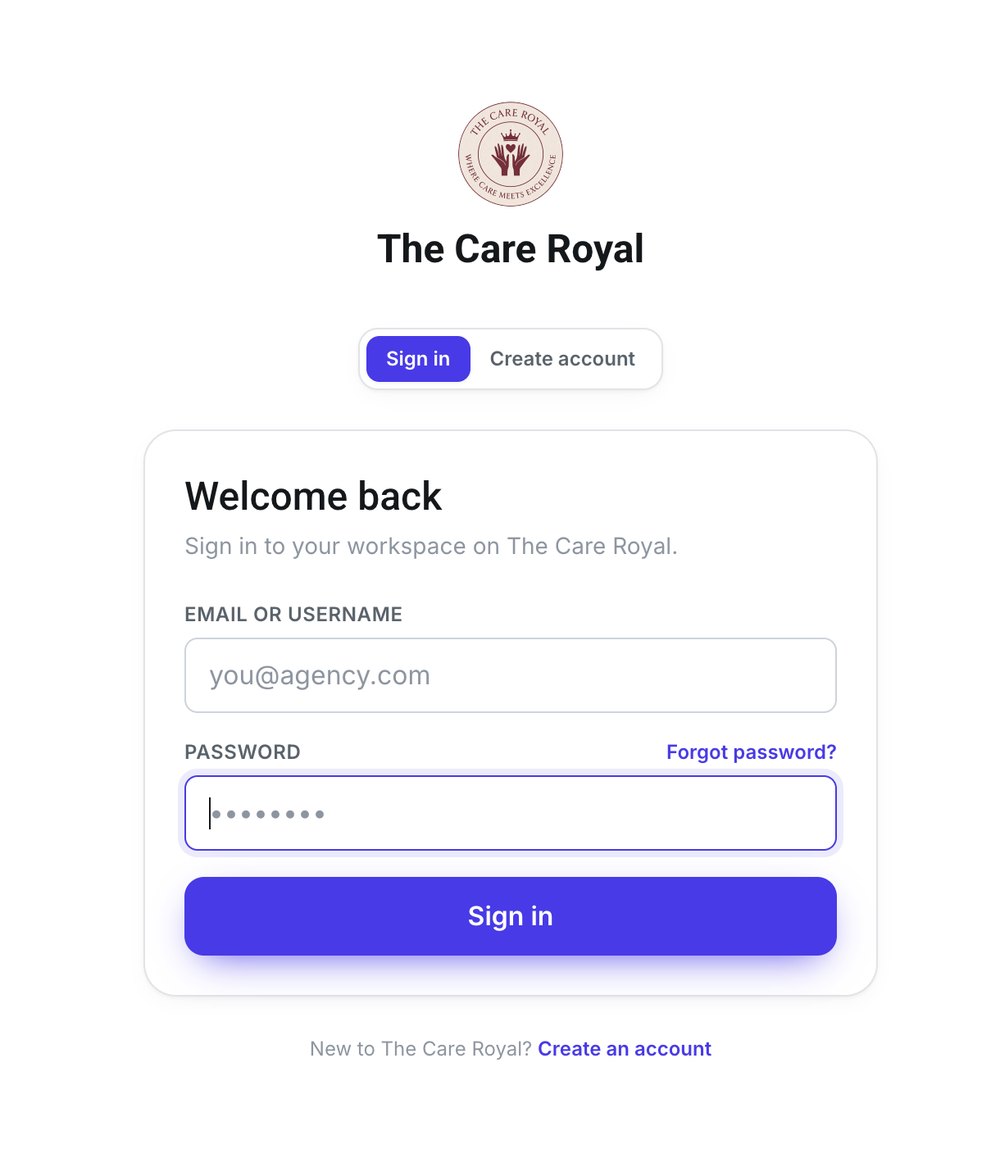
The Care Royal running in production
The Care Royal — onboarding in the live product

A multi-tenant platform that home care agencies run their day on: shift scheduling, caregiver and client records, applicant tracking, messaging and documents. Four roles — owner, manager, caregiver and family — each seeing a different product.

The work that matters most here is invisible: per-tenant isolation enforced at the database layer, so no agency can reach another's records even if the application code is wrong. Security that depends on the UI behaving is not security.

Caregivers clock in and out with GPS verification and the timesheet builds itself, then the platform computes gross, tax and net against current federal and California tables. Rather than depend on an external payroll provider, the calculation runs in-house — which removed the dependency and kept the platform out of the money-transmission path entirely.
Tegula Stone Live · Web, iOS, Android
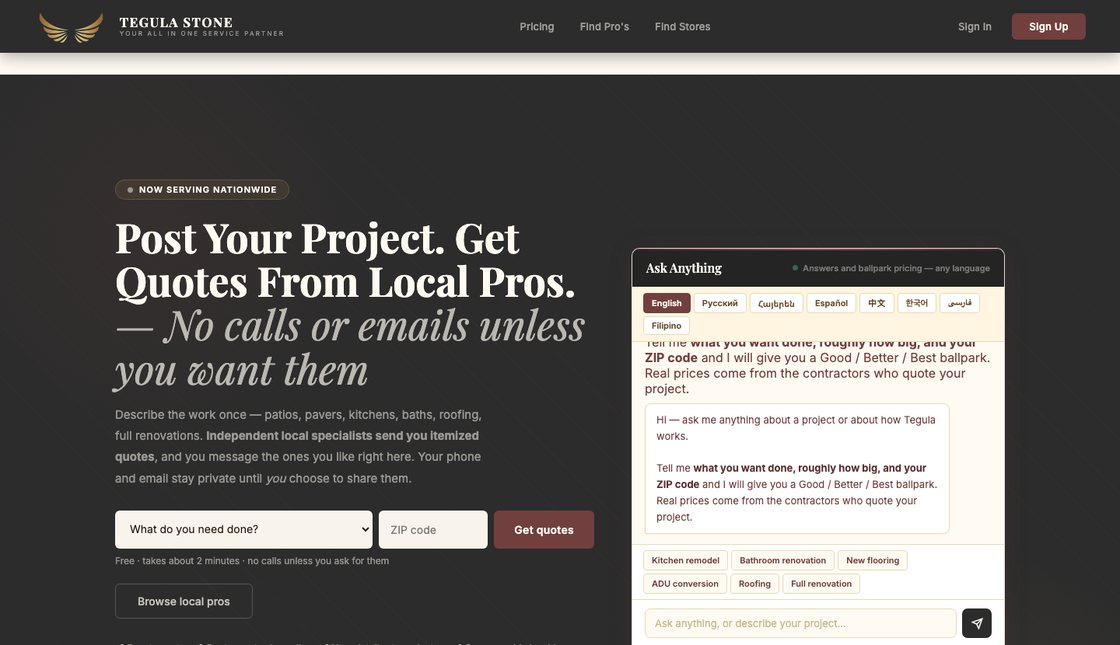
Tegula Stone running in production
tegulastone.com — contractor marketplace

A two-sided marketplace connecting homeowners with stone and tile contractors — quoting, bookings, messaging, reviews, and subscription billing driven by Stripe webhooks.

A production error-monitoring pipeline captures browser and backend faults, groups them by normalized signature, and alerts once per issue rather than once per occurrence — then does the less obvious half: filters out third-party scripts the business does not control. Most of the alerts were a bug in someone else's analytics beacon. An alert stream nobody reads is worse than none.

Instrumentation is only useful if it is honest. Edge counts and analytics were reconciled against each other before either was trusted, which caught a gap wide enough to have sent the roadmap the wrong way. Killing a conclusion beats defending it.

Unified Savers Live · Web
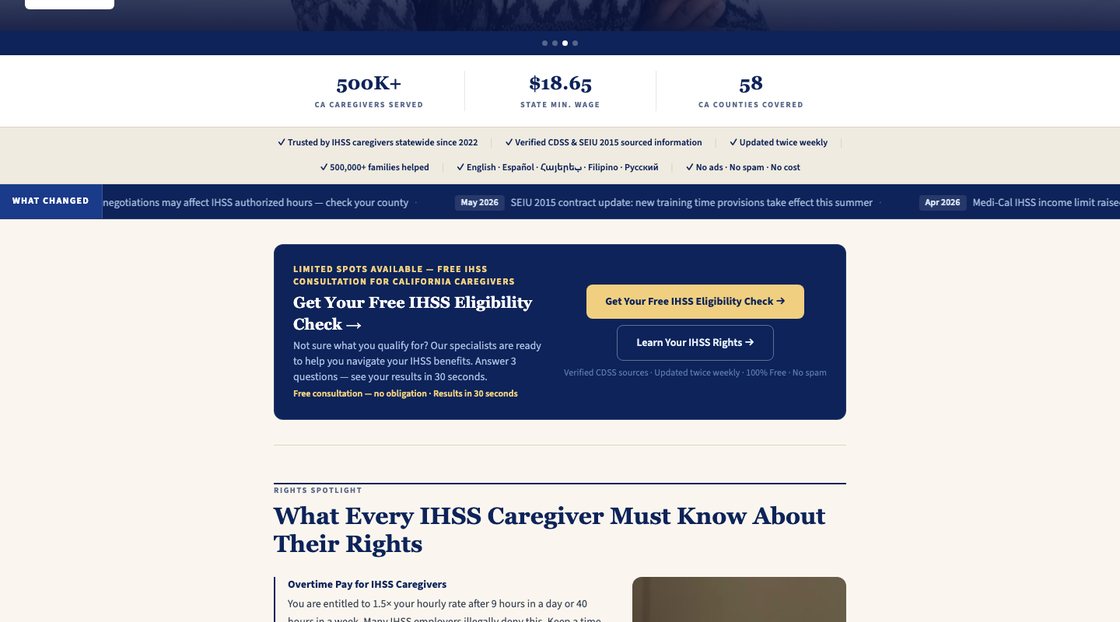
Unified Savers running in production
unifiedsavers.com — consumer product

A consumer savings product built on a serverless edge stack with static generation, holding a 90+ Lighthouse performance score across the site. Content architecture, technical SEO and the automated publishing pipeline are all owned in-house.

Shipped, not prototyped
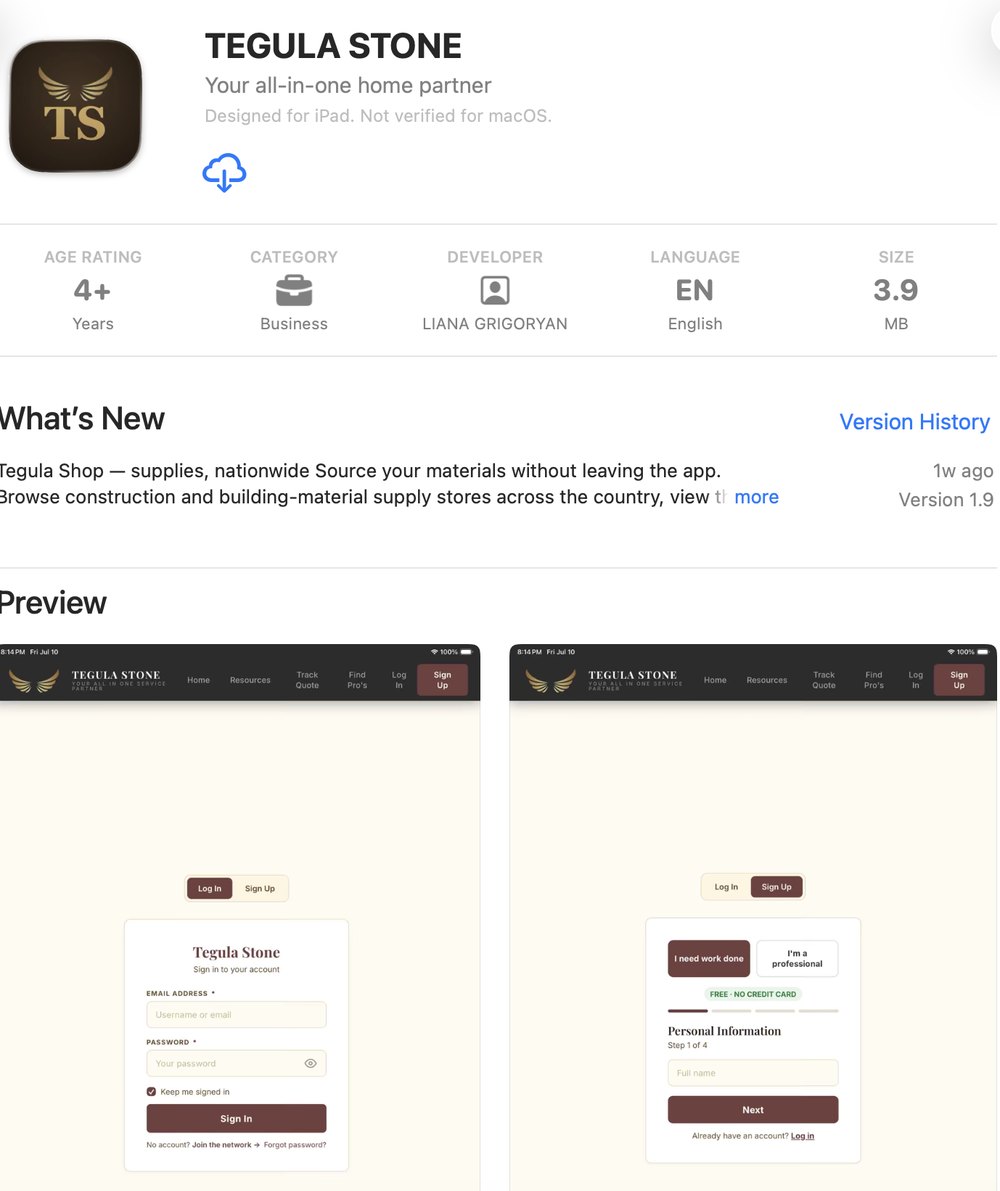
Tegula Stone live on the App Store
Tegula Stone — live on the App Store

Two of these are native apps built, signed and pushed through App Store and Google Play review in-house — certificates, provisioning, store listings and all. Most products never survive that last mile.

Three examples, not the full list — an e-commerce storefront, an internal operations agent and several under wraps are not shown here.

Security & compliance

Products that hold health records, payment details and client addresses are built to be defensible from the first commit, not hardened after something goes wrong.

Isolation

Enforced below the application

Multi-tenant data separation written into database security rules, so one customer cannot reach another’s records even if the application code is wrong. A permission check that lives only in the interface is a suggestion, not a control.

Access control

Roles that cannot be self-granted

Role, tenant and permission fields are immutable to the account they belong to. A signed-in user editing their own record cannot promote themselves, because the rule pins those fields server-side.

Healthcare

Built to HIPAA’s technical safeguards

Care platforms are built against the HIPAA Security Rule’s technical requirements — unique user identification, role-based access, audit controls over record access, automatic logoff, and encryption in transit and at rest.

Review

Adversarial by default

Auth paths are reviewed as an attacker would: assume the client is hostile, assume storage is readable, assume the token is forged. That discipline has caught real privilege-escalation holes in production code before anyone else found them.

AI & automation

AI is used where it removes work that would otherwise need a person, and kept away from the parts that have to be exactly right. Every system below runs in production today, not as a demo.

Content at scale

Article generation on edge inference

A publishing pipeline that researches and drafts articles, running on Cloudflare Workers AI. It replaced a paid API that had quietly expired and stopped producing for five weeks. The replacement has no key to revoke and no per-article cost.

Autonomous operations

An operations agent that runs overnight

Every night it collects business data, scans six separate error sources, runs the SEO work, drafts marketing, then asks one question per business: what would win the next paying customer. The morning report is ready before the day starts.

Cost discipline

The right model for the job

Volume work — drafting, summarising, classifying — goes to a free tier. Judgement calls go to a stronger model. That split keeps inference cost near zero while the reasoning stays sound.

Guardrails

Deterministic where it counts

Audits count real faults in code; a model only prioritises and writes. Payroll maths is arithmetic against published tax tables, never inference. An AI that invents a problem is worse than no AI, so it never gets to decide what is true.

Approach

Shipping is the job

Code that is not in production has not been tested by anything that matters. Work goes all the way through review, signing, release and the monitoring that follows.

Measure before concluding

Numbers mislead more often than they lie. Every metric is reconciled against a second source before a plan is built on it, and the disagreement gets said out loud.

Leadership, not just delivery

A nineteen-person call centre operation, led to first place across the entire organization. Coordinating people is a separate skill from building systems, and a technical co-founder needs both.

Build your product for equity.

Share what you are building. If it is a fit, expect a call to talk through scope and what an equity split looks like.

Goes straight to Liana. No list, no newsletter.

By sending this you agree to the Terms of Use — which resolve disputes by individual arbitration — and to the Privacy Notice. Do not send confidential material before an NDA.

[email protected] Connect on LinkedIn →

M.B.A., University of Hertfordshire · B.A. Psychology, American Military University

Terms of Use · Privacy Notice